Beyond the Quick Answer: How Deep Research AI Elevates Legal Analysis
Key takeaways:
- Bloomberg Law’s Deep Research agent moves beyond quick AI answers by clarifying context, planning research, and analyzing complex legal questions across multiple sources.
- Deep Research agent follows an iterative process to identify gaps, refine research, and strengthen the analysis before delivering a final result.
- Structured, well-cited outputs help attorneys move faster from research to legal analysis, strategy, and drafting.
- Bloomberg Law combines authoritative legal content, source verification, and safeguards to support more trustworthy AI-assisted research.
In just a few short years, AI has transformed how legal professionals work, taking on high-frequency, practical tasks such as answering basic legal questions, summarizing court opinions and statutes, and producing initial drafts – often before the next billable tenth ticks by.
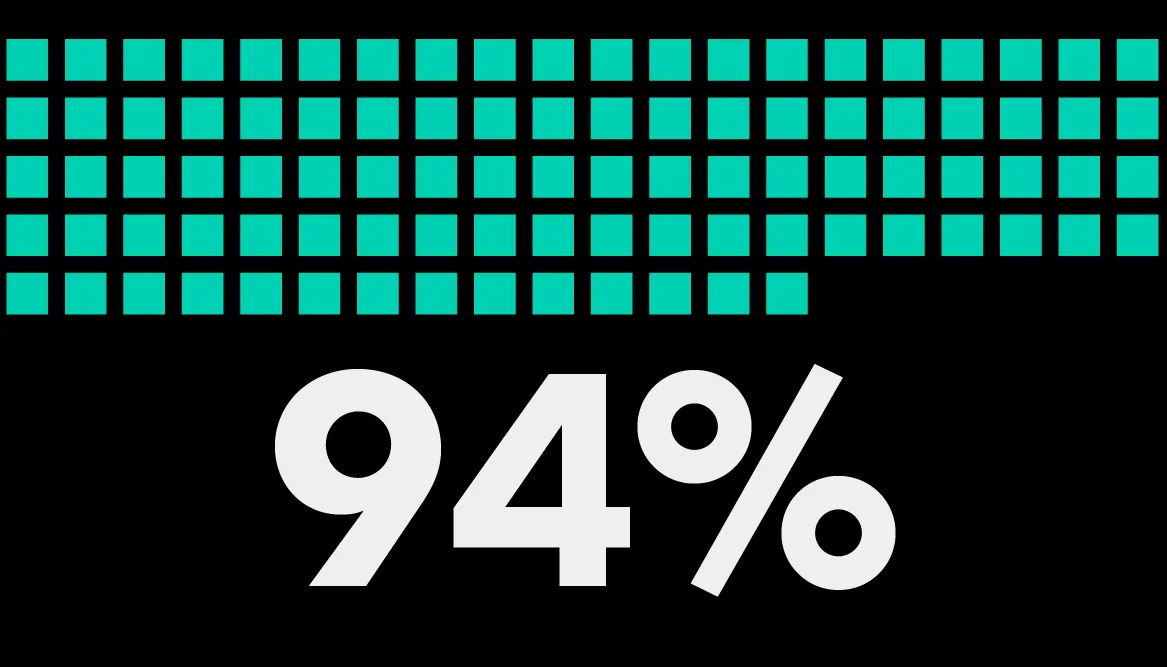
This shift is reflected in Bloomberg Law survey data: Nearly 70% of attorneys report using generative AI in some capacity for work.
Now, AI is moving beyond first-order tasks toward higher-level legal work.
[Watch on demand: In the webinar Deep Thinking for Elevated AI Research, learn how to get trusted AI answers to complex, multi-step legal questions.]
When a quick answer is not enough
Legal work does not operate on one level. Some questions call for quickly surfacing and synthesizing information. Others require a higher level of legal analysis that’s harder to achieve with generic AI tools.
These more complex questions often involve multiple steps, corroborating or conflicting authority, and a broad range of materials – from cases and statutes to practical guidance and current developments.
The distinction becomes clear when the same legal topic is considered at two levels. A question such as “What are the elements of RICO?” may be answered in a single, citation-grounded response.
A more complex question, such as “Can a plaintiff plead a civil RICO conspiracy under 18 U.S.C. § 1962(d) against outside professional service providers who allegedly helped a company conceal a fraudulent billing scheme, but who did not directly participate in the predicate acts?” may require additional context, research, and reasoning.
See how Deep Research clarifies a complex civil RICO question, identifies research gaps, and turns the findings into structured, well-supported analysis. [3:15]
For a direct question, an immediate answer may be enough. For a more complex issue, the research may need to account for the governing jurisdiction and the party’s role, break the inquiry into subtopics, weigh multiple authorities, and consolidate the findings into a structured analysis.
Bloomberg Law’s AI offers the Deep Research agent, designed for that more demanding work. It clarifies the legal question and its context, develops a research plan, evaluates multiple sources, and synthesizes the findings into something akin to memo-ready analysis.
Bloomberg Law AI’s Deep Research agent plans and conducts iterative legal research across multiple sources, then synthesizes the findings into a structured, citation-supported analysis.
Crucially, Deep Research is iterative. At each stage, the system checks for gaps and, when issues emerge, searches again using refined parameters, as a legal researcher would.
In an environment where some questions require quick orientation and others call for deeper analysis, legal professionals need to match the AI capability to the task. Deep Research brings that more deliberate research process into one connected workflow.
See how Bloomberg Law brings AI-powered research, authoritative legal content, and source-backed analysis together in one platform. Request a demo to explore how Deep Research can support your most complex legal research.
How Deep Research tackles a legal issue in 6 steps
Picture a traditional research workflow: multiple searches across sources, findings gathered piece by piece, and additional time spent synthesizing the material into a coherent analysis.
Deep Research brings these time-consuming activities into one iterative workflow. One layer of research informs the next, while emerging gaps prompt further clarification and more searches.
Taken together, this workflow comprises six steps – clarification, research planning, iterative research, synthesis, critique, and delivering high-confidence results – that provide a more deliberate path to usable legal analysis.
Step 1: Clarify the question and its context
Just as a map needs fixed coordinates, Deep Research first anchors the question in specifics.
It begins by clarifying the legal question and the user’s underlying intent – for example, by identifying the relevant jurisdiction or party role. When more context is needed, it asks for additional details, such as timelines, user objectives, and, when applicable, available evidence.
Advantage: By establishing these parameters at the outset, Deep Research ties the research to the specific legal issue rather than generating a one-off response based on an incomplete prompt.
Step 2: Build a research plan around dependent legal issues
With the coordinates fixed, Deep Research creates a research plan by breaking the larger inquiry into smaller research objectives or subtopics.
For example, before evaluating exceptions, recent developments, or jurisdictional splits, Deep Research may first need to establish the governing legal standard. It then determines how the subtopics relate to one another.
Some may proceed in parallel, while others must unfold sequentially as one issue informs the next – a critical distinction in legal and regulatory research, where questions often depend on one another.
Advantage: By separating dependent issues from independent lines of inquiry, Deep Research creates a deliberate research plan that precedes – and informs – the structured response.
Step 3: Conduct iterative, in-depth research
With the research plan established, Bloomberg Law’s Deep Research identifies legal materials tied to each research objective, such as court opinions, statutes, agency materials, and practical guidance.
After reviewing the initial materials, it assesses whether the source coverage is complete. If those sources reveal a jurisdictional split, for example, Deep Research may focus its next search on recent appellate authority in the relevant jurisdiction.
Advantage: This iterative loop distinguishes Deep Research from a generic chatbot reply. Rather than simply retrieving a passage or answering a one-off question, it refines the research as new issues emerge and weighs multiple authorities, issues, and considerations. The emphasis on depth and precision shortens the path to more complete, usable analysis.
Step 4: Synthesize the findings
Once the initial research is complete, Deep Research brings the most relevant material together into a unified analysis.
It organizes the issues, authorities, and findings in a logical structure, showing how the different lines of inquiry fit together. Rather than presenting disconnected research results, it weighs competing considerations and connects the findings to the user’s underlying legal question.
The output reads less like a generic AI summary and more like a legal work product – an organized research memo that presents the issues, authorities, and findings in a logical structure.
Advantage: That structure helps legal professionals understand how the pieces fit together, pressure-test the conclusions, and verify the supporting sources through visible citations.
Step 5: Critique and refine
Deep Research then evaluates the analysis it has produced, testing whether the findings adequately address the original question and whether the supporting research is complete.
It checks for unresolved issues, insufficient source coverage, conflicting authority, or gaps across the research subtopics. When it identifies a weakness, it can refine the research parameters, conduct additional searches, and incorporate the new findings into the analysis.
Advantage: This critical review helps reduce the risk that an incomplete initial search will shape the final conclusion. By revisiting the work before delivery, Deep Research strengthens the reasoning, improves source coverage, and produces a more thoroughly supported result.
Step 6: Deliver high-confidence results
At the final stage, Deep Research delivers a comprehensive, well-cited report designed for clarity and confidence.
The report presents the legal issues, relevant authorities, reasoning, and findings in a coherent structure, with visible citations that allow legal professionals to trace and verify the supporting sources. Its organization makes the analysis easier to review, pressure-test, refine, and share.
Advantage: While the analysis cannot replace legal judgment, it does provide a solid and immediately useful foundation for subsequent work, such as drafting a motion, advising a client on exposure, or shaping litigation strategy. It is also easy to refine, develop, and share.
Together, these six steps bring deliberate planning, higher-level reasoning, critical evaluation, work-product structure, and practical usability into one connected research process.
[On-demand webinar: See how Bloomberg Law’s Deep Research agent helps legal professionals move from research to analysis more efficiently.]
What supports trustworthy analysis
The strength of AI legal analysis depends on the system behind it.
To adequately address complex, multistep legal questions, Bloomberg Law’s Deep Research agent combines the essential elements of authoritative content, safeguards, and verification tools, all within a secure legal research ecosystem.
Research across authoritative legal sources
Complex legal questions rarely resolve through a single source. Deep Research draws on Bloomberg Law’s authoritative primary law and expert-authored secondary materials across federal and state jurisdictions, including court opinions, statutes, regulations, constitutions, court rules, agency materials, books, practical guidance, and Bloomberg Law News.
Ground responses in cited material
Bloomberg Law uses retrieval-augmented generation, or RAG, to ground Deep Research responses in source material within the platform, helping reduce the risk of fabricated material, such as invented cases or citations.
Verify authority without leaving the platform
Bloomberg Law’s Deep Research shows how a legal issue is broken down and keeps cited authority within the platform, allowing users to trace and verify sources without moving among products or browser tabs.
Prioritize supported answers
One of the key features of Bloomberg Law’s AI is that it will abstain from providing an answer when there is not sufficient source data available. This reduces the risk of hallucinations, where other AI tools will attempt to fill in the blanks with baseless statements.
Deep Research can reduce abstentions caused by incomplete initial coverage by conducting more thorough research, while still prioritizing accuracy over an unsupported response.
Protect research integrity and customer data
Bloomberg Law applies safeguards for research integrity, including protections against prompt-injection attempts. For example, the system would decline a request to explain how to hide assets before bankruptcy.
Bloomberg Law’s AI also undergoes structured evaluations by former practicing attorneys, helping ensure relevance and compliance with industry standards.
In all cases, user questions and responses remain separate from those of other customers. As an additional privacy and security safeguard, user inputs are not used to train AI models.
Together, these capabilities support deeper analysis, with greater visibility and control.
AI-powered deep legal research within Bloomberg Law
As legal professionals become more fluent in AI, expectations are rising beyond speed alone – what matters next is how legal professionals put this technology to work.
Direct questions may call for a quick, citation-grounded answer. Complex legal issues require a more deliberate process – one that clarifies the question, plans the research, examines sources iteratively, and synthesizes the findings into a usable analysis.
Bloomberg Law’s Deep Research agent brings that process into one secure platform, with supporting authority visible for verification. The result is a stronger starting point for advising clients, shaping strategy, and developing legal work product under tight deadlines.
Request a demo to see how Bloomberg Law’s all-in-one platform supports complex legal research workflows.